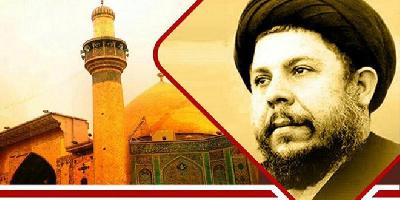
Shahid Sadr holds that Islam, through its distribution methods, can regulate the distribution of economic wealth in the best possible way. In the issue of distribution, he considers “oppression” as the fundamental social problem.
Ayatollah Sayyid Muḥammad Bāqir al-Ṣadr (b. 1353/1934-35 – d. 1400/1980) was a Shi’a jurist, exegete of the Qur’an, thinker and also a political activist in Iraq. He studied with Ayatollah al-Khoei and other great scholars in Najaf, and finished his studies before the age of 20. He then began teaching religious disciplines in the Seminary of Najaf. In order to cut people’s relations with Ayatollah al-Sadr, the Ba’th regime sent security forces around his house. The house was under siege for nine months. During this time, the regime sent its representatives to Ayatollah al-Sadr in order to dissuade him from his path, but he continued to support Ayatollah Khomeini and the Islamic Revolution of Iran. When the regime realized they could not dissuade al-Sadr and his sister Bint al-Huda from their path, they martyred them on Tuesday, April 8, 1980 AD (Jumada I 23, 1400 AH).
His most significant works include Falsafatunā (our philosophy), Iqtisadunā (our economics), and Durus fi ilm al-usul, known as al-Halaqat. Iqtiṣādunā was written in order to state the foundations of the Islamic economy and its difference from other prominent economic doctrines. The book introduces and criticizes the economic doctrines of Marxism and Capitalism, and then outlines the Islamic economic doctrine. In his preface to the first edition of the book, Shahid Sadr characterized it as an initial attempt to a deep investigation and a systematic presentation of the Islamic economic doctrine. Although Iqtisadunā was written over half a century ago, it is still one of the most significant and the most common books concerning the Islamic economy. It is a reference for the Islamic economy in different universities around the world.
In Iqtisadunā, Sayyid Muhammad Baqir al-Sadr distinguished the notions of “economic doctrine” and “economics”. The economics (the science) seeks to discover economic phenomena in the society, their causes, as well as their interrelationships, while the economic doctrine offers a fair and just procedure to regulate people’s economic life. He believes that Islam has provided an Islamic economic doctrine, rather than Islamic economics. Thus, the Islamic economy offers a fair and just procedure to regulate people’s economic life, without ever seeking to make scientific discoveries in economic phenomena.[1]
According to Shahid Sadr’s view, Islamic economics is based on three principles:
- The principle of co-ownership:
Unlike the Capitalist economy, which based its principle on private property and the Socialist economy that considers the principle of state ownership, Shahid Sadr considers three types of private, public, and state ownership equally important in Islamic economics.
- The principle of economic freedom with certain limitations:
In Shahid Sadr’s view, concerning freedom in Islamic economics, there are two types of limits: the internal ones in accordance with Islamic laws and regulations, and the external ones imposed by the state based on Islamic values.
- The principle of social justice:
Sayyid Sadr considers the realization of social justice in society based on two bases: public partnership and social balance.
Another point on which Shahid Sadr emphasizes is that the Islamic economy is based on realism, morality, and spiritual factors. Realism, he explains, means that the economic aims of Islam are in line with the realities of human life. Morality refers to the emphasis Islam puts on ethical factors, and the spiritual factors refer to the link between the Islamic economy and normative values.
Shahid Sadr holds that Islam, through its distribution methods, can regulate the distribution of economic wealth in the best possible way. In the issue of distribution, he considers “oppression” as the fundamental social problem. The distribution system in Islam consists of two main tools: labor and need. From this point of view, Islam considers labor as the factor which causes the worker to own the result of his action, and this private labor-based ownership expresses the natural desire of man to own the results of his labor. The Islamic rule that Shahid Sadr extracts is that labor gives rise to the worker’s ownership of the matter, but he is not the cause for its value. So, when the worker extracts pearl, he only owns it, but he does not give value to it.
As for the Islamic Banking system, Shahid Sadr believes that the bank is one of the necessities of the community for collecting unused property for its use in economic affairs. He explains the ways to gather resources in nonprofit banking to replace the Western banking system, and for this purpose, he elaborates on bank duties. And finally, in the appendix on jurisprudence, he proposes ways of escaping usury and explains about bank-related jurisprudence and defends Islamic allocation and equipping techniques such as Muḍārabah.
In the last two chapters of Iqtisadunā, Shahid Sadr puts stress on the role of the state in the economic system as the vital force of productive wealth and the purposes of distribution. The importance of the role of government in the thought of the Shahid Sadr is that it is not possible to launch a sizeable economic project without a government, and these large projects require capital accumulation, which is impossible without a state because Islam has prohibited the accumulation of huge wealth. The government must intervene in the economy to ensure that natural resources are produced and distributed fairly.[2]
Finally, it is to be noted that the theory of the lacuna (mantaqat al-firagh) is among the most important views propounded and innovated by Shahid al-Sadr in Iqtisadunā. According to this theory, in some cases, Islam gives the Islamic government the authority to legislate laws in response to the requirements of a time. This area of legislation is called “mantaqat al-firagh” (the lacuna). Ayatollah Sayyid Muhammad Baqir Sadr believes that some laws legislated by the Prophet Muhammad (PBUH) are examples of such laws filling the lacuna, rather than laws conveyed to us by the Prophet (PBUH) through the Prophet.[3]
The article was written by Hujjat al-Islam Sayyid Mostafa Daryabari and Dr. Morteza Karimi.
—————————————————————————-
References
[1] See. http://en.wikishia.net
[2] See. https://wikifeqh.ir
[3] See. http://en.wikishia.net