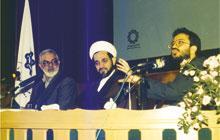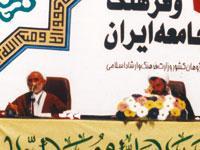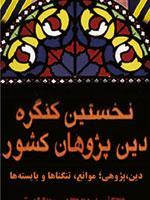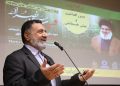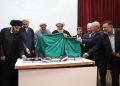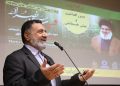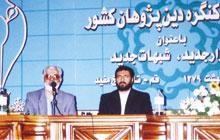
The Second Country Religion Researchers Congress conducted titled Contemporary religion research, new instrument and new suspicion in May in 2000 by country Religion Researchers Secretariat effort and Islamic Culture and Guidance of Qum, in the presence of many of scholars, the knowledgeable, religion sciences researchers and university and seminary professors in Sheikh Mofid hall in Qum University.
First Mohammad Mahdi Ahmadi, general director of Islamic Culture and Guidance of Qum, greeted the audience and mentioned the necessity of holding such congresses and said:
Hundreds research institutions and trained men who are active in religious fields should coordinate with today and new generation needs and questions by tact as soon as possible. To this purpose and supporting religious researches made religion researchers council to present such issues which are common between religion researchers with different scientific branches. Thus in the first congress presented religious issues like knowing damages and also compulsions in religious research. In the second congress it will discuss the new suspicions and instruments.
Then Mohammad Javad Sahebi, country religion researchers planning council secretary, explained about the history of new suspicions emergence and the responsible devout role to confront this and so mentioned the necessity of holding the second religion researchers congress and said religion researchers secretariat targets the following cases as the most important ones:
Informing religion researching researchers and institutions
– Communicate between research institutions and individuals by information
– Supporting prominent religious science researchers
– Directing religious researches by determining research priorities
Predicted scientific plans and strategies to achieve mentioned goals are as follows:
– Scientific meetings at the presence of internal and external scholars in line with secretariat targets
– Publishing a newsletter especially for informing religious sciences researchers
– Holding manual religion researchers congress and presenting necessary topics
– Using new information means such as internet, computer and field researches
– Preparing information services to religion research institutions and individuals
The other orator was Mr. Ahmad Masjidjamei, Islamic culture and guidance minister deputy, insisted on applying aspects and paying attention to current society requires in religious researches and said:
Ancient times, religious research was a major pointin religious and traditions activity and if we tend to work in religious research field, we should consider the society necessities.
In the other part of his statements, Masjidjamei said: in religious research field, it is to considering contacts, new instruments and using new methods, and to religious research we should prepare a new research climate and spread responsible foundations. And improve religion in all aspects of life.
He added: today we need such educating and social researches in the areas which can consider different society necessities and identify religious perturbation and pay attention them more, and religion researchers are they who try to eradicate these perturbation.
Then Sayyed Abbas Qaemmaqami presented his article titled “text interpretation, appearance understanding or commentary” and explained about penetrating Hermeneutic knowledge in western theology and then by a comparative attitude explained about text interpretation in the progress of appearance understanding and commentary understanding and added:
Appearance understanding related to Principle science framework and commentary understanding is in the scope of Irfan which is more prominent in Mohy al-din Arabi works.
The next congress lecturer was Dr. Mahdi Mohsenian Rad, researcher and professor, started his utterance with the research methods topic. He criticized the struggle between positivist groups and the intellection ones in universities and said:
Research methods can be useful and trouble shooter in their turn. The collection of research methods is like a spanner box which can use each spanner to fix one bead. The other orator was Hujjat Al-Islam Sadeqi Rashad who started his speech by talking about religion research diagnosis movements and divided them in to three groups:
1 the first movement is traditional and intensely devoted to past theology, and sanctifies them.
2 the second movement is modernist and considers no limitation in new thoughts modification and break the boundaries and has no power to criticize or evaluate.
3 the third movement is the realistic one which criticized past and new thoughts and draw the positive efficient factors from first and second movement and omits negative factors.
In the afternoon programs of congress, Dr.Mohammad Samiei, Islamic Nationwide information Institute custodian (PARSA), said about internet and its role in research:
A lot of equipment can be available for researcher by internet. As such, electronic translation which became popular in European languages and in some extent interred in Arabic language. Then Dr. Mohammad Mojtahid Shabestari lectured about “faith and historical religion knowing” and faith role in the first days of Islam and changing oral culture to written one and its consequences. To know about first Islamic faith we need to know religion historically. And here we just theorize, although it is of great importance.
The other orator, Mostafa Malekian talked about religious suspicions and divided them according to believes, morality and worships in to eight parts and explained them clearly. He also declared that no classification for suspicions can be the last one. The last orator was Hujjat Al-Islam Ahmad Moballeghi who presented his speech as an analytic research about stable and variable. He presented these two on the view point of four prominent scholars like Imam Khomeini, Allameh Tabatabaei, Mohammad Baqir Sadr and Dr. Ali Shariati:
Imam Khomeini solved the stable and variable problem by stability and variability framework. Allameh Tabatabaei also found the way in the scope of stable natural needs and variable temporary ones. Martyr Sadr suggested a solution for problem in free dominion which is under the control of Islamic governor and he can decide about new events.
Dr. Ali Shariati also solved the problem by representing layered religiontheory. Means more human knowledge the more layers will be appeared. It is worth to say that meanwhile holding the congress, two works of country religion researchers declarations given to the audience, religion researchers (including prominent articles which some were presented in current congress)and religion research, impediments, hardships and necessities (including the articles and orations in first congress), then the audience visited research achievements exhibition which behold by religion researchers secretariat with Qum research institution and foundations contribution and it drawn the audience attention.
Prominent articles in this congress published as a book titled “religion researchers, especial for the second religion researcher congress” and oration and gathering in this congress published in a collection titled “contemporary religion research, new instrument and suspicions”