FR. CLOHESSY: FATIMA (S.A) AND ZAYNAB (S.A) ARE ARCHETYPES OF COURAGE FOR EVERYONE -INTERVIEW
“In the daily struggles to be faithful to everything that is just and true and moral – our own private Karbalā’ moments – both Fātima and Zaynab offer us a template or example of standing firm, no matter what the odds”, Fr. Christopher Clohessy said in an exclusive interview on his written books about the two great ladies of Islam.
Christopher Clohessy is a South African-born Roman Catholic priest who holds a Bachelor of Sacred Theology from the Pontifical Urbanianum University in Rome, and a PhD from the Pontifical Institute for Arabic and Islamic Studies (PISAI), also in Rome.
Having done all his studies at the PISAI, he is at present a resident faculty member of that Institute, lecturing there in Shia Islamic studies, Quranic Studies, and Islamic Ethics. He is also a visiting lecturer at the Pontifical Beda College in Rome (a college for men training to be priests), where he lectures in Fundamental Theology, Ecclesiology and Mariology.
Christopher Clohessy is author of “Fâṭima, Daughter of Muḥammad” (2009, 2018 2ND edition) and “Half of My Heart: the Narratives of Zaynab bt. cAlî” (2018), both published by Gorgias Press. The book on Lady Fatima (S.A) was, at the time of its first publication (2009) the first substantial work on her life in a European language, based on the primary Arabic sources. The same could be said for the new book on Lady Zaynab (S.A).
In an exclusive interview with Shafaqna, Professor Christopher Clohessy explains about his enthusiasm toward Shia Islam and the unique books he wrote in this domain.
Shafaqna: How did you get familiar with Islam?
Fr. Clohessy: I did all my Islamic studies in Cairo (where I studied mostly Arabic) and in Rome (where I had a mixture of Muslim and non-Muslim lecturers). As a young priest working in a strongly Muslim area in the city of Cape Town (South Africa), I noticed that almost all the families in my parish had Muslim relatives or friends, and I thought it important, especially as regards their Muslim family members, that these could not be overlooked or ignored by the Church simply because their faith was expressed differently. I thought it vital that non-Muslims should have a solid, academic understanding of Islam and of its most important Arabic text, and so I embarked on the Licentiate and then the Doctoral program at the PISAI, where I have been ever since.
Shafaqna: Why did you become interested in Shiism?
Fr. Clohessy: Part of the Licentiate studies was a course in Shī’ī Islam. I was deeply moved both by the life of al-Husayn and by the Karbalā’ event, since both resonate deeply in the Christian (and especially the Catholic) ethos. I decided then that I would specialize in Shī’ī studies, especially since at that time there were very few Western scholars paying attention to Shī’ī Islam. In fact, when I announced my decision to specialize in Shī’ī Islam, a number of my professors thought it would be a waste of time. Now, of course, many more Western scholars have begun to read the Shī’ī texts more deeply.
Shafaqna: Which characters in Islam have attracted you more? Why?
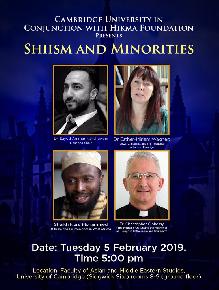
Fr. Clohessy: Of course, the Lady Fātima and her son al-Husayn are very attractive figures for Catholic Christians especially, since there are clear parallels between them and the figures of Jesus and Mary in Christianity. I recently gave a short talk on this issue at Cambridge.
Shafaqna: Why did you choose Hazrat Fatima (S.A) and Hazrat Zaynab (S.A) to write about? What is special about these two ladies in your point of view?
Fr. Clohessy: I had originally planned to write my doctoral dissertation around the life of al-Husayn, and especially around the salvific and redemptive themes already examined so expertly by Mahmoud Ayoub. But in reading the life of al-Husayn in the sources, I was distressed to find that almost nothing had been written about his mother, the Lady Fātima. There were, of course, some small books – including Shariati’s famous text – but few if any based on a substantial reading of both Sunnī and Shī’ī primary sources.
I set myself to do this: I wanted to produce the first major biography of the Prophet’s daughter, in a Western language but based almost entirely on primary Arabic sources. Having successfully defended my doctoral thesis, the work on Fātima was published in 2009, and then a second edition was published in 2018 (in which I made a few minor changes to the text – mostly correcting some of my Arabic translations, but also added a composite list of her names as found in the sources and a translation of her famous sermon).
The Zaynab text happened in almost the same way; four of us, all Catholic priests with PhD’s in Arabic and Islamic studies, were lamenting one day that the Islamic scholars are writing so little academic work on the great women of Islam – for example, to the best of my knowledge there still exists no proper biography of Lady Khadīja. We each agreed to take one women and produce a thorough biography. I was immediately attracted to the Lady Zaynab, since it would be a continuation of my study of the life of her mother and brother, but also of my examination of the Karbalā’ event.
Shafaqna: Please explain more about your books, its feedback among Muslims and Catholics and its role on the introduction of the great ladies of Islam to western people.
Fr. Clohessy: So, as I have mentioned, both books attempt a fresh and academic reading of the lives of these two extraordinary women – Fātima and her daughter Zaynab. Both of them, in the struggle against tyranny and injustice (Fātima after the death of her father and Zaynab after Karbalā’) provide contemporary women with archetypes or models for standing firm in some of the struggles humanity faces today.
Quite clearly, both were involved with major, transformative socio-political struggles, struggles that few of us will ever have to face. But each of us must, every day without fail, make moral and ethical decisions about how we are going to behave or speak, how we are going to think or react. Many of these decisions frighten us, because they might make us unpopular, even among our friends and loved ones. In these daily struggles to be faithful to everything that is just and true and moral – our own private Karbalā’ moments – both Fātima and Zaynab offer us a template or example of standing firm, no matter what the odds. But they were also both human beings – no matter what their spiritual gifts, they were both women, wives, mothers, daughters. They understood loss and fear and grief. It is this – their humanity combined with their courage – that makes them such important role models. And they cut across religious, political, cultural and social boundaries. They are not just models of courage and truth for Muslims. Or for women. They are archetypes for everyone.
source: shafaqna