It is usually thought that Islam views God as a heartless Ruler of the world, an angry Judge, and a wrathful Lord who is looking meticulously for a wrongdoer to punish them. For those who have thoughtfully read the Quran only once in their lifetime it is very easy to discard this view beyond any doubt.
However, for those who have not carefully read the Quran, or do not have the necessary means and knowledge to analyse its verses, there stands, in the living memory of the history, an episode which, very clearly, epitomizes the notion of love between the creator and the created, and the sacrifice and suffering that could be endured readily and contentedly by a human being for the sake of the beloved God.
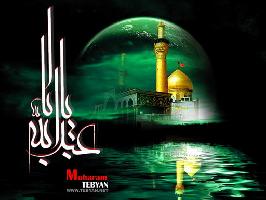
This episode is the event in which Hussain, the grandson of the Prophet of Islam, offered not only his soul and his flesh to the Lord, but that of his sons, his nephews his cousins and his closest friends, and bore the grief of the foreseeable capture of his wife, his daughters and his sisters.
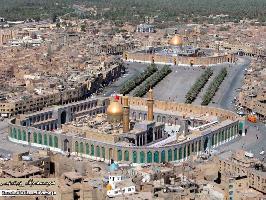
This happened on the 10th day of Muharram in a land called Karbala in the year 682 AD. As the grandson of the Prophet and someone who was very much adored by him, Hussain could have lived a very comfortable and well-heeled life after his grandfather, much honoured and revered by his contemporaries. However, he was devoted to the cause of the Lord, concerned about the guidance that was revealed to his grandfather and eager to make sure that the path of love towards God was not obstructed by voracious, materialistic type of people who had joined Islam only to fulfil their mean and meagre worldly ambitions.
And he did well. On one single day he demonstrated a degree of love and sacrifice towards the Lord that could hardly be paralleled by any similar incident in the history of mankind. He loudly cried his dissatisfaction of what was going on in the name of the Lord and with recourse to the authority of his grandfather; a cry that can be heard even today through the long stretched tunnel of history.
Hussain used to say in his supplications:
“My Lord! You are the One who removes all others from the heart of those whom You love, in a manner that they do not love but You, and do not seek refuge from anyone but from you; You are their intimate company when the trials of the world frightens them. My Lord! Those who have lost You, what do they find, and those who have found You, what do they lose?” Hussain had nothing to loose since he had found a Love that gives life to everything.