
Publisher’s Word
With a view to making the rich culture of Shi’ism more profoundly known around the globe, the DAR AL-SADEGHAIN Cultural and Publishing Institute, in accordance with the aims of its Council of Founders, established an International Centre for this purpose in March 1998. In fulfilling our responsibilities to this end, we feel duty-bound to provide the Shi’ite communities of the world with easier access to sources of knowledge on landmarks in the history of Islam. Hence, we have been engaged in researching, compiling and translating these valuable writings on Shi’ism. Our first publication is this book “With the Caravan of Light” by Husayn Ansarian, a wellknown cleric and religious orator. The book gives a short account of the personality of the companions of Imam Husayn (a), the third Imam of Shi’ite Islam. We would like to express our thanks to all the scholars and erudite personalities for their comments and suggestions.
M. J. Al-Yazdy
Managing Director
Notes:who is who?
`Ubaydullah, son of Ziad ibn-Abih: The young governor of Iraq, appointed by Yazid ibnMuawiyah. He was a faithless, aggressive and blood-thirsty oppressor of low birth who never abided by his promises. His mission was to hold Imam Husayn(a) prisoner or to kill him by whatever means he could. With an army of three thousand men, this fiendish man initiated the tragic event of Karbala and has remained cursed and detested by all pious people for ever. Abdullah ibn Umeir and Amr ibn-Jinada: Both companions of Imam Husayn(a) and martyred in Karbala. Their murderers flung their decapitated heads towards the Imam(a). Abu Ja’ far Tabari: An eminent Shi’ite personality whose trustworthiness, dignity, eloquence and profound knowledge was known to all. Abul Aswad Da’ ali: A loyal companion ofHadrat Ali(a) who learned syntax and the rules for the correct pronunciation of Arabic words from him. Abul Hatuf ibn-Harath and Sa’d ibn-Harath: They were brothers from the Ansar tribe of Medina. For twenty years they were members of the group that had revolted against Hadrat Ali(a) and were notorious for being his bitter enemies. Feeling sympathetic towards Imam Husayn(a) for being so tyrannically oppressed, they abandoned Yazid and fought for the Imam’s holy cause and were martyred. Aqilian: They were of the family of Aqil, the brother of Amir al-Mu’minin(a). They were martyred in the battle of Karbala. Ahl-e Manteq: The logicians. Ahl-i-Ussul: Scholars versed in Islamic law and canonical doctrines namely Scripture, Sunna, the Consenus of Opinion and Deduction of legal rulings. A philosopher is the the person who, through using scientific laws, thought, reason and purification ofhi s soul investigates the true nature of things in existence. Aqaba ibn-Sam’an: He had the letters from the people ofKufa inviting Imam Husayn(a) to come to their city. When addressing the Kufans, the Imam(a) told Sam’an to produce these letters. Aqilian: They were of the family of Aqil, the brother of Amir al-Mu’minin (a). They were martyred in the battle of Karbala. Ayatullah Haj Aqa Rahim Arbab: A learned figure in the Theological Seminary in Isfahan. He taught theosophy, philosophy and Islamic Law and its principles. He was endowed with fine moral qualities. Bani Hashim: Among the most famous tribes of Qureish from which came famous personalities including Abd al-Muttalib, Abu Talib, Ali’s(a) father and Abdullah, the Prophet’s(s) father. Barir and Sa’id: Both companions of Imam Husayn(a). The former was martyred while fighting and the latter during the noon prayers. Fadl ibn-Shadhan: Ail erudite Shiite from Nishabur, He was a great author, unequalled thinker and free of temporal attachments. His tomb is visited by men with heart, understanding and knowledge. Habib ibn-Mazahir Asadi: A prominent companion of Imam Husayn(a) who left Kufa for Karbala at the request ofthe Imam. He was an old man but spiritedly put up a good fight and was martyred. Hafhaf ibn-1Vlasruq: A companion of Imam Husayn(a) who accompanied the Imam(a) to Karbala. He called out the times of prayer and on the day of Ashura was martyred. Hani ibn-‘Urwah: a prominent Shi’ite known for his devotion who acted for a short while as host of Muslim ibn-Aqil, Imam Husayn’s(a) messenger to Kufa. He was apprehended by Ubeidullah ibn-Ziad and then killed because he refused to give information about Muslim’s whereabouts. Hashim Ilahi Qumsha’i: An outstanding figure in the Theological Seminary as well as in the University. He was pious, and a mystic, free of temporal attachments. His book of poems with more than twelve hundred pages is always within reach for men who are on the path of mystical experience of the truth. He has commented on Ibn Farabi’s Fusus and has written a two-volume book on the Philosophy of Illumination. Hurr ibn-Yazid Riahi: He was from a well known Arab tribe and a commander in Yazid’s army in Iraq. He was ordered by Ubeidullah ibn Ziad to hold Imam Husayn(a) prisoner. On the day of Ashura, however, the pricks of conscience made him turn away from Yazid and repent. He joined Imam Husayn(a) in the battle and was martyred. Husayn ibn-Ali Baghdadi: A historian in the tenth century A. H. , the author of Jawharah alThamin. Ibn Bashir Hadrami: A prominent figure among the companions of Imam Husayn(a). On the night of Ashura he got the sad news that his son was taken prisoner. Although the Imam(a) permitted him to leave the camp to free his son, he insisted on staying with the Imam(a) and was martyred. Luqman: A sage free of temporal attachments, pure in soul and inspired with divine wisdom. A Surah of the Qur’an is named after him in which reference is made to some of his wise sayings. Mariqin: Those who revolted against Hadrat Ali(a) and fought him in Nahrawan, a town near Baghdad. Miqdad ibn-Aswad, Abudhar Ghaffari and Salman Farsi: Three distinguished Companions of the Prophet(s) and were recognised by God and His Messenger(s) for their devotion, righteous deeds and morality. Muawiyah ibn-Wahab: A companion Of Imam Sadiq(a) and a reliable and learned narrator. Muslim ibn-Aqil: Imam Husayn’s(a) cousin and emissary to Kufa. The Kufans betrayed him and he was taken prisoner and killed by the order of Ubeidullah Ziad. Nakithin: Those who broke their pledge of allegiance to Hadrat Ali(a) and brought about the battle of Jamal. Qasitin: Those who pledged allegiance to Muawiyah and fought Imam Husayn(a). Saravi-Muhammad ibn-Ali ibn Shahr Ashub: From Sari, Tabaristan (Mazandaran). He was an outstanding Shi’ite traditionalist and biogragher. The author of some very important books including “Manaqib Ali bin Abi Talib (The Virtues of the Family of Abi Talib).” Sayyid ibn Tawus: A great Shi’ite scholar from Hellah in Iraq. He was exemplary in virtue and religious devotion. He wrote the book “Lahuf’ on the history ofKarbala and the tragic martyrdom of Imam Husayn(a) and his companions. Shimr ibn-Dhul Jowshan: Ofthe Arab tribe of the Bani Kilab. He was once a companion of Amir al-Mu’minin(a). At the time of the Arbitration, a group ofpeople inNahrawan had revolted against Hadrat `Ali(a) during his caliphate. Shimr was a member of that group and then later he joined the Umayyad party. Years later he went to Karbala as ordered by Ubeidullah ibn Ziad and fought in the battle. He volunteered to kill Imam Husayn(a) and subsequently beheaded the Imam(a). He was doomed to be treated as a contemptible outcast in this world and condemned to apainful punishment in the fire. The Fourteen Sinless Ones: The Prophet of Islam(s), his daughter Fatimah Zahra, his son-inlaw, Amir al-Mu’minin and their eleven descendents(a) all of whom held the position of Imamate. The Late Akhund Mulla Muhammad Kashi: A man of great learning. At the time of the Qajar Dynasty he taught philosophy, theosophy, mysticism and ethics at the Theological Seminary in Isfahan. The Late Haj Sayyid Rida Sadr: An eminent comtemporary theologian and author whose works in the realm of Islamic law, ethics and history are well known. Umayyad Caliphs: Irreligious individuals of low birth, steeped in lusts and typical throwbacks to the pagan culture of the early years of Islam. They ruled over the oppressed Muslims for one thousand months committing innumerable atrocities during their rule. Wahab ibn-Abdullah: A young man from the tribe of Kilab. He had been newly-wed when he came to Karbala with his mother and wife to join Imam Husayn(a). He and his wife were martyred for the cause of Allah. Wahab ibn-Manbah: A popular individual in the days of the Umayyad Caliphate. He claimed he had knowledge of the Torah, the Gospel and seventy-two other scriptures especially about the prophets. The Shi’ah authorities do not believe him and refute his claims and statements because he was a rank liar. Zahir ibn-Qin Bajali: He was a distinguished man ofKufa and a follower of the Caliph Uthman. On his way from Mecca to Karbala he met Imam Husayn(a) and became attracted to his divine, sublime personality. He fought bravely to protect the Imam’s life and was killed. Ziad ibn-Abi Sufyan or Ziad ibn-Abih: father of Ubeidullah whose faith and religion Muawiyah bought for a mere trifle. Because his mother Sumayyah was promiscuous, it is not known who Abu Sufyan’s father was. Muawiyah, alleging that his father Abi Sufyan had had an affair with Ziad’s mother, declared Ziad his brother.
Notes:Battles
Nahrawan: The battle brought about by the Khawarij-those who revolted against Ali(a). They were completely defeated. Siffin: The battle waged against Amir alMu’minin(a) by Muawiyah. The war ended through an arbitration maliciously plotted by Muawiyah and Amr A’ as to the detriment of the believers. The Battle of Jamal: The battle brought about by Ayisha, Talha and Zubeir against Ali ibn-Abi Talib(a), the rightful Caliph immediately after the Prophet(s). Hadrat All(a) was victorious in the battle. The triple battles: Jamal, Siffin and Nahrawan.
Notes:Books
`Unsur Shuja’at: An eight-volume book that discusses the personality ofImam Husayn(a) and his loyal companions by Mirza Khalil Kamarah’ i, the great philosopher and celebrated theologian. A1 Rijal: A biographical work by Shaykh Tusi about the narrators of the Sunna of the Prophet and of the People of his Household. Amali-e-Saduq: A book by Shaykh Saduq discussing ethical traditions and narrations. Arba’in Qazi: A research work by Shahid Qazi Tabataba’ i, Imam of the Juma prayers in Tabriz, discussing the return of the Household of the Prophet(s) who were held prisoners for forty days after the martyrdom of Imam Husayn(a). Bahr al-Ma’ aruf: Abook onthe subject ofmystical and moral issues, by Mulla Abd al-Samad Hamadami. Bihar al-Anwar or the Encyclopedia of Shi’ism: A book in 110 volumes, by Mullah Muhammad Baqir Majlisi. Dar al-Salam: A scholarly book, by Haj Mirza Husayn Nouri, a Shi’ite scholar. Farsan al-Hija: A book about the companions of Imam Husayn(a) by Haj Shaykh Dhabihulla Mahallati, a learned traditionalist. Ilal al-Sharayi: A valuable book onthephilosophy of Islamic tenets and doctrines by Shaykh Saduq. Kamil al-Ziarat: A very important book concerning the religious traditions and narrations about the martyrdom of the Sinless Imams(a), eulogies about them and about visits to their holy shrines.
Kanz al-Amal: A sixteen-volume book about the Sunna of the Prophet(s), by Muttaqi Hindi, a Sunnite learned man.
Kanz al-Fawa’ id: A book about divine teachings, prophetic traditions and narrations, by the late scholar Karajaki. Kharaj-e-Ravandi: Avaluable work bythe Shi’ite scholar, the late Ravandi. Ma’am al-Akhbar: A scholarly book explaining the narrations of the people of the Household of the Prophet(s). Manaqib: A book in four volumes, by Ibn Shahr Ashub Saravi. Maqtal Khwarizmi: A book about the history of the martyrs, by A1 Khwarizmi, a famous scholar. Pishva-e-Shahidan: Aresearch work ontheevent o1’Karbala, by Ayatullah Sayyid Rida Sadr. Rijal-e-Kashi: A biographical book about the companions of the Prophet(s) and of the Sinless Imams(a), by the late Kashi. Sahuf: A book about the event of Karbala, by Sayyid ibn-Tawus, a Shi’ite learned man. Sharh-e-Nahj ul Balagha: A twenty-volume book expounding upon the wise sayings of Hadrat Ali(a), by Ibn Abi al-Hadid, a great Sunnite scholar. Sharh Shafia: An important work of Ibn Faras. Sharh-e-Nahjul Balagha: A book in Persian in more than thirty volumes by Allama Muhammad Taqi Ja’fari. Tadhkerah: A book about Islamic facts by Ibn Jouzi, the Sunnite scholar. Tafsir Tha’labi: A book commenting on the Qur’an by Tha’labi, a great scholar. Thawab al-A’ amal and Iqab al-A’ amal (Rewards and Punishments for one’s Deeds): A book by Shaykh Saduq, a major Shi’ite traditionalist. The Miracle of History: A book in eight volumes of `Unsur Shuj a’ at, discussing the event ofKarbala and the martyrdom of Imam Husayn(a), by the late Mirza Khalil Kamarah’i.
Notes:geographical Areas
Basra and Ctesiphon: Cities in Iraq. Hamun: A plain. Isfahan: A famous city in Iran noted for Islamic and historical monuments. Karbala: A famous city in Iraq, where Imam Husayn(a) and his companions are buried. It is a Qiblah for pious and true lovers of that sinless and yet oppressed Imam. Kufa: A city in Iraq, whose inhabitants were notorious for breaking their allegiance to Imam Husayn(a). Kufan: Inhabitant of Kufa. Madressa-e-Sadr: A school in Isfahan forreligious studies attended by many shi’ite scholars.
Shamian: Inhabitant of Sham (Syria).
The Ka’aba: The Muslim holy shrine, The Inviolable House of God in Mecca.
More Notes
Hunut: Annointing dead bodies with camphor. Force and Matter: This subject comprises a philosophical question discussed by many philosophers in their writings. Iftar: The breaking of the fast at the end of each day during the month of Ramadan. Jami and Mani’ : A definition meaning the whole and only truth of something or about someone with no distortion whatsoever. Mukashifa: The mystical spiritual ecstasy that saints experience in which they realize spiritual and divine truths. Qa’imiat: A prayer quoted from Hadrat Mahdi which gives a good account of the companions and children of Imam Husayn(a). Tasua and Ashura: Refer respectively to the 9th and 1 Oth day of the month of Muharram during which Yazid declared a state of war against Imam Husayn(a). Consequently the warring parties went out to battle in which the Imam and his companions were martyred. The Preserved Tablet (Lawh-e-Mahfuz): Men of heart believe that the preserved tablet represents God’s knowledge. It is a divine tablet on which all that God decrees is recorded. Zakat: The poor-rate, i. e., a legal rate on wealth that is used for relief and support of the poor. Ziarat: Paying a visit to the holy shrines of the Prophet(s) and of the sinless Imams(a). Ziarat-e-Nahiah: A text containing prayers for the fallen in the battle of Karbala, composed by the 12th Imam(a). Ziarat-e-Warith: A prayer rich in subtleties of language, quoted from the Sinless Imams. It is said on Friday nights as a homage paid to the memory of Hadrat Husayn(a).
A Unique Event
We will speak here about those who effected a unique event on the face of the globe, a great tragic occurrence that has served as a lesson for all-all ages and lives- an incomparable fact and an overwhelming source of advice and admonition. Spiritual and worldly people alike would see such an event only but once, for never again will heaven and earth witness such a panorama. Two tribes had clashed in battle in the desert of Karbala: one a tribe of pure divines; and the other totally corrupt and worldly. The first was Godcentric, seeking nothing but for the love of Truth, striving to win His favour, to hoist the banner of reality, and to maintain the light of virtue; they endeavoured to overthrow despots and despotism, to uproot the tree of evil and keep green the tree of piety. The other group was centered around false deities-the pleasures of the flesh and the passion and worldly riches and blatantly disregarded morality.
divines beyond Comparison
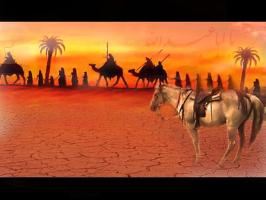
These angelic figures, seventy two in number, under the leadership of Husayn(a) pitched the camp of magnanimity, honour and faith and constancy in the arena desert of Karbala. They were human in body but angels in soul. The Prophet(s) is reported to have said:
The Believers are dearer to God than the angels nearest to Him.
(Kanz al-‘Amal. vol. 1 p. 164)
And in another narration he(s) said:
They deserve greater respect than the Ka ‘aba.
(Bihar al-Anwar vol. 68 p. 16)
And which believer could be more superior or praiseworthy than those who in watering the tree of religion, in preserving the culture of Divine unity, and in safeguarding the efforts of the previous prophets and saints with an unspeakable zeal, shed their precious blood in Jihad for the cause of Allah? Never once did they fear their wicked enemies and, at the side of The Chief of the Martyrs(a), fought them to pay their debt to t he Truth and to steer the storm-stricken ship of humanityto thepeaceful shore of salvation. They were taught the Book of Revelation by the Messenger of Allah and by the People of his Household and with perfect sincerity practiced all that they were taught. As far as magnanimity and deep insight were concerned, they were second to none. They were perfect symbols of purity of soul, brightness of heart, unflagging faith, moral perfection, impeccable conduct and unstinting self-sacrifice.
Never did they stumble under the heavy burden ofresponsibility. They reflected the quintessence of Truth, standard bearers ofnobility, geniuses in creation and doyens of all virtues; and graces. Those who wanted to harm them did them good and those who put them to the sword kept their memory alive. They stood and fought side by side with the Imam(a) to the bitter end, withstanding the enemy’s attacks and impervious to any offer to abandon their leader. There were a veritable sea of endurance, constancy, honour religious zeal and purity of heart, never succumbing to the fiendish temptations of their enemies. One base fellow, under the command of the son of S’ad was asked as to why had he been so ready to kill a descendant ofthe Prophet Muhammad(s). He retorted that if others had themselves seen what he had seen, they certainly would have done exactly as he did, adding that they had won the day only by force of numbers.
Worldlings to the Worst Degree
The enemy numbered thirty thousand men all of whom were notorious for their sinful behaviour. They were led by a man who was once a waif named Ubeidullah whose mother had revelled in the pleasures of the flesh. They were a bunch of thugs who had gathered together to kill the offspring of the Prophet(s). All of them were the subjects of Yazid, a libertine and a drunkard and they had learned the lessons of brutality, plundering, oppression, hypocrisy, ego-centrism and polytheism in the school of the Umayyad rulers. Zahir, that gallant warrior, called the people of Kufa in that army to help the offspring of the Prophet(s) and withhold their support of Ubeidullah, the son of Ziad. He said that both of them have gouged out your eyes with red-hot irons, they have cut off your hands and legs, your ears and noses, they have hanged many from among you and have beheaded Qur’an reciters like Hujr ibn-‘Adi and Hani ibn-Urwah. The angry mob instead interrupted his exhortations and insulted him. They lauded Ubeidullah and his father and threatened either to kill Imam Husayn(a) or deliver him and his companions to Yazid as prisoners of war. How ignorant were the people to choose viceincarnate over virtue-incarnate as Amir and ruler. Zahir continued:
The children of Fatima(a) deserve more support,from you than Samiyya (adulteress and mother of Ibn-Abi Sufyan). If you do not wish to support Imam Husayn(a) then at least leave him alone to deal with Yazid in whichever way he chooses, Yazid will be pleased with you even if you fail to kill Husayn(a).
Fearing that such a strong argument might encourage the mob to act in favour of Imam Husayn(a), Shimr, claiming that they were all tired of Zahir’s long-windedness, shot an arrow at him. Zahir condemned Shimr as a poor beast, sure to be punished on the Last day. When eventually Zahir fell dead on the battlefield, Imam Husayn(a) rushed to the side of his body and cursed his killers. Zahirhad indeed called the people of Kufa what they were symbols of inhumanity without peer.
The Revlatory Dream of Imam Husayn(a)
Before dawn on the day of Ashura (the tenth day ofMuharram, the first lunarmonth ofthe Muslim calendar) the Imam(a) had a revelatory dream. He said he saw a pack ofrabid dogs attacking him and among them was a dog spotted like a leper, which was the (fiercest of all. Shimr who eventually personally killed the Imam(a) was a leper.
In a second dream he saw his grandfather, the Prophet(s) who told him that he would soon be joining the divine folk. And so, his dream came true on that very day of Ashura. (Maqtal of Kharazmi vol. 1, p. 25 r and Bihar al-Anwar vol. 25 p. 3)
The first dream depicted the true nature of the enemies of the Imam(a) and the second depicted the divine certificate of merit given to him by the Messenger of God(s).
The battle of Karbala was the human conflict between truth and falsehood where although the disbelievers had apparently won the day in reality it was the believers who were victorious.
The Viewpoint of Amir al-Mu’minin(a)
In sermon 133 of Nahjul Balagha, Hadrat Ali(a) said:
The world marks the limits of the vision of those whose hearts are blind who see nothing beyond it. Thesight ofthetrue seer pierces througand realizes that the eternal abode of man is beyond this world. Consequently he wants to leave this world while he who is blind wants to get further involved in it. The true seer collects his provisions from it for the hereafter while the blind person collects his provisions as if he can remain in this transient world.
The revealed religions and wise men throughout the ages are unanimous in their view that human beings are not created just to enjoy the ephemeral pleasures of this earthly world, to experience ‘ the ups and downs of life and then simply die; man comes into being and awaits on the shore of the sea of immortality for a while. Man should therefore embrace this limited opportunity to lead a life of piety thanking his Lord for His blessings. He should strive towards moral perfection and try to make this world like an Eden of happiness for all. Unfortunately such cannot be expected from the wicked and base. Worldly people are egoists and divine personalities are God-fearing and annihilated in Him. Divine people resonate with the melody of truth while those whose hearts are blind sing the song of fancy. The pious destroy the abode of the body to build the mansion of the soul. Hakim Ilahi Qumshahai, based upon his knowledge of Islam, interpreted the last words of this leader of lovers of God in the following stanzas of poetry:
Thou art thesole object oflove and worship in my heart and I gaze upon Thee with its eye.
Candle-like I burn with the desire of being near to Thee all the sooner; With my head
on the enemy’s spear I’m bound for Thy seat
I asked Thee to show me Thyself when I reached the tryst with You on Mt. Sinai Thou arttheFountofLifefrom which Thou quenchest my thirst
On the edge of the sea of existence I experienced the ascension of witnessing The mirror ofthe heart broke but the image of the Beloved remained
The true image of Thee revealed the secret of He is Allah, the One.
These seventy two men bore the colours of the truth; they abandoned their humble abode in this world and gained possession of a mansion in the heavens; they laughed in the face of death and gained eternal life; they subdued their evil desires and yearned for nothing but the Truth. After the event of Karbala, some followed the tracks of the Caravan of light and others went astray. Let us embellish ourselves with the morality of Husayn(a) and shun the fetid smell of Yazid. Imam Husayn’s piety and religious devotion set an example for all generations in human history that a godly way of life leads to salvation.
An Outstanding Figure Among the Husayni(a) Group
Among those who had taken to follow the tracks of the Caravan of Light, and an outstanding figure in his time, was the late Akhund Mulla Muhammad Kashi. Among his proteges were such distinguished personalities as Ayatullah Martyr Mudarris, Haj Shaykh Murtada Taliqani, Haj Agha Rahim Arbab, Ayatullah Sayyid, Jamaluddin Gulpaygani and Ayatullah al-Uzma Haj Agha Husayn Borujerdi. The Akhund was a pious septuagenarian who spent most, of his life acquiring knowledge and teaching in a small chamber at the SadrMadressah in Isfahan. His paltry earnings were hardly enough to provide bread and water, but as far as the spiritual side of life was concerned, he was a fountain of virtue. Not enslaved by his sexual desires he remained unmarried and lived on a meagre daily ration of bread and cheese or bread and vegetables with broth once a week.
Once, a young theology student waking up just before dawn to say his night prayers, found himself so surrounded by voices of praise and glorification of God coming as it were from all the walls and doors of the madresseh, that he fell unconscious. In the morning he went to the Akhund and told him the story not knowing what that chanting so full of light was, he found that it corresponded to the very chanting of God’s Glory and praises that the Akhund recited before the dawn.
Akhund Kashi said to him:
The fact that all creation praises God is not something surprising, what is surprising is that this heavenly praise reached your ears as if it was coming from the walls and windows.
Worship God wholeheartedly like Imam Husayn did, because if you worship Him upon a margin you lose both this world and the hereafter. That is the sheer loss. (Qur’an, Surah Hajj v. 77); Acquire divine attributes from godly men; learn bravery and honour from the shining sun of Karbala. Follow the example of Husayn(a) fighting against the rebellion of those estranged from Islam and learn how to get nearer to God. Attend the school of Islam and learn the Qur’an, courage, affection, magnanimity, beneficence and loyalty.
But to become lion-hearted, godly men, you must first learn good manners. Imam Husayn’s companions were all distinguished and pious personalities. Those in the Caravan of Light knew well that their journey would end up in paradise, thanks to their devotion to their leader for the cause of Allah.
The Qur’an says:
As for.those who disbelieve, their deeds are as a mirage in a desert. The thirsty one supposes it to be water till he comes unto it and finds it naught and finds in the place thereof, Allah, who pays him his due; and Allah is swift at reckoning. Or as a darkness on a vast, abysmal sea. There covers him a wave, above which is a wave, above which is a cloud. Layer upon layer of darkness. When he holds out his hand he scarce can see it. AndforwhomAllah has notappointed light, for him there is no light.
(24/39-40).
Elsewhere the Quran says:
*But whoso finds ease in disbelief, on them is wrath from Allah. Theirs will bean awful doom. That is because they have chosen the life of the world rather than the Hereafter and because Allah guides not the disbelieving folk. Such are they whose hearts and ears and eyes Allah has sealed. And such are the heedless. Assuredly in the Hereafter they are the losers*
(16/106-109).
Indeed they are the losers because they are deprived of God’s favour and of the intercession ofthe Prophet(s) and the Folk ofhis Household(a). The Quran says about them:
*But he who turns away from remembrance of Me, his will be a narrow life, and I shall bring him blind to the Assembly on the Day of Resurrection. He will say: My Lord Wherefore have you gathered me (hither) blind, when I was wont to see? He will say: So (it must be) Our revelations came unto you and you forgot them. In like manner you are forgotten this Day. Thus do we reward him who is prodigal and does not believe the revelations of his Lord; and verily the doom of the Hereafter will be sterner and more lasting*
(20/124-127).
The Most Exalted and the Most Contemptible
By the most exalted we can mean no other than the devoted companions of Imam Husayn(a) and by the most contemptible only to his enemies. The former group were annihilated in Allah and as mystic travellers were journeying unto Allah, being unattached to all and everything but Allah. The latter group, according to the Qur’an, chose the life of the world rather than that of the Hereafter. The Prophet(s) said to Fatima(a), the paragon of virtue and the mirror of the divine attributes for all ages, that the companions of Husayn(a) were like stars in the sky. They competed with one another in sacrificing their lives for their leader. Their graves, would be in the heavens. (Bahar vol. 44 p. 264)
These birds ofEdenhad all fallen onthebattlefield in less than half a day to get all the sooner and nearer to their sole object of worship. Thus they proved to be rightly called the greatest and the most exalted. Imam Husayn(a) called them the best and the most trustworthy companions. In contrast, the dirtiest record of evil; deeds ever observed have been attributed to the servants of Yazid, the representative of the false deity of that time, and they thus deserve to be called the most contemptible.
So strong and unwavering was their faith in Imam Husayn(a) that his companions defied the power of the most abominable of men, Yazid, and the most powerful aristocracy ofthe time, the Umayyad –dynasty. Husayn(a) and his followers were moons and Yazid and his men were dogs that barked at the moon. The martyrs of Karbala are superior to all other martyrs in human history.
Martyrs Without Peer
The martyrs of Karbala: Zahir, Habib, Muslim, Barir, Hurr, S’aid, Abbas, to mention but a few, have been unsurpassed in human history. The Quran says:
*Naught is as His likeness*
(45/11).
They were of pious descent. The Quran says:
*A goodly saying, as a goodly `tree, its root setfirm, its branches reaching into heaven giving its fruit in every season… *
(14/24-24).
As for those wicked men who fought Imam Husayn(a), the Quran also says:
*… having hearts wherewith they understand not, and havingeyes wherewith they see not, and having ears wherewith they hear not. They are as cattle-nay, but they are worse. These are the neglectful*
(7l79).
The companions, knew that all power belonged to Allah. The Quran says:
*… Whoso desires power (should know that) all power belongs to Allah. Unto Him good words ascend, and the pious does he exalt… *
(35/0).
Hadrat `Ali(a) said that they were martyrs surpassed neither by anyone before them nor after them. Elsewhere Imam `Ali(a) said while addressing the earth of Karbala:
Strange though it may seem, Oh you mysterious earth, on the Day of Resurrection there will rise out of you a people that will enter paradise without having been called to account.
(Bihar vol. 44 p. 255).
The companions of Imam Husayn(a) had based their lives on whatever their leader had mentioned the Prophet(s) as having said:
God loves the loftiest not the lowest aims in life.
Thus the army of Imam Husayn(a) was Godcentric and the Umayyad army was Satan-centered. The light of Husayn(a) was the light of God that never goes out. The Quran says:
*Faint would they put out the light ofAllah with their mouths, but Allah will perfect His light however much the disbelievers are averse*
(61/8).
All things attract their complement. Angelic people attract those whose characteristics correspond to theirs and infernal people do likewise. The Quran says:
*…Lo! Allah has bought from believers their lives and their wealth because the Garden will be theirs… *
Monotheists trade their lives for their Lord’s favour and polytheists trade their lives for the things the devil shows them, however worthless they may be. The true value of a human being lies not in his wealth but in his virtue.
Husayn(a) and his companions resonated with the refrain of the Truth:
We gave up everything we had to win Thy favour.
The Quran says:
*Be mindful of your duty, and do right. Allah loves the good. *
(5/93).
Elsewhere the Quran says:
*Lo! Allah is with those who keep their duty unto Him and those who are doers of good*
(16n2s).
If we follow the example of Imam Husayn’s(a) companions we are sure to win God’s favour.
The Greatest Reality from the tonge of Jabir ibn- Abdullah
`Atiyyah ibn-Sa’ d ibn Janadah said that he was in the company of Jabir when he paid a visit to the holy shrine of Imam Husayn(a). Jabir performed his ablution and put on some scent. He placed his hand on the sacred grave of the Imam(a) and swooned. When he came to himself, he lamented bitterly and then paid homage to the memory of the Imam’s(a) companions saying that they also shared in his battle against his enemies. `Atiyyah asked how could such a thing be; Jabir, greatly surprised, quoted the Prophet(s) as having said that one who supported others in what good they had done would be rewarded according to what they had done. If one is honoured with a visit to his holy shrine, one should say in his prayers:
I swear by Almighty God, His angels and His messengers that I believe in your leadership and in your return unto Allah. Every step I takefor the cause ofmy religion and all my efforts in life are under the auspices of your leadership and guidance and inspired with my deep love and reverence for you. I surrender my heart to your pure soul and I try to follow the example you set for human salvation.
If after saying such a prayer however, one is not honest in his vow, that person would have told a great lie that will not be forgiven. Imam Husayn(a) and his companions were all paragons of virtue and if one wants to revere them duly for their divine attributes, one should try to be their true disciple in all stages of life. In contrast, the enemies of Imam Husayn(a) and his followers were all vice incarnated manifestations of villainy, tyranny, bestiality, infringement upon the rights of others, neglectfulness of responsibility, covetousness, envy, pride and hypocrisy. When called to account on the Last Day, they will appear to be totally deprived of God’s mercy. Imam Husayn’s(a) murder was so terrible a crime that in the punishment of the murderers, there may be no room for mercy.