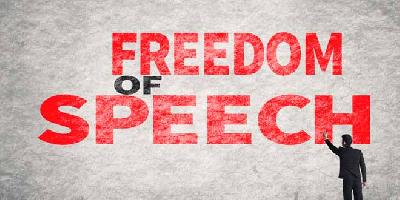
In Islam “the principle of ibaha” (i.e. the principle that everything is allowed unless you know otherwise) has been confirmed and in Islamic texts and sirah (way of life) of the leaders, freedom of expression has been emphasized.
Human intellectual development and the maturity of his intellect require his freedom in thought, expression and behavior. However, this freedom is limited since unconditional freedom is nothing but chaos and depriving others of their freedom. The question now is what is the scope of this freedom and how can all people’s freedom be protected so as not to compromise the security of society and the rights of all citizens.
The religion of Islam, which bases its ideological foundations on reason and intellect and always relies on logic and wisdom, has not only removed any obstacle to the expression of thought but also, from the very beginning, has invited its opponents to intellectual argumentation and debates:
قُلْ هاتُوا بُرْهانَكُمْ إِنْ كُنْتُمْ صادِقينَ
“Say, ‘Produce your evidence, should you be truthful’.” (The Holy Qur’an, 2:111 and 27:64)
أَمِ اتَّخَذُوا مِنْ دُونِهِ آلِهَةً قُلْ هاتُوا بُرْهانَكُم
“Have they taken gods besides Him? Say, ‘Produce your evidence!’”(The Holy Qur’an, 21:24)
قُلْ فَأْتُوا بِكِتابٍ مِنْ عِنْدِ اللَّهِ هُوَ أَهْدى مِنْهُما أَتَّبِعْهُ إِنْ كُنْتُمْ صادِقينَ
“Say, ‘Then bring some Book from Allah better in guidance than the two so that I may follow it, should you be truthful’.”(The Holy Qur’an, 28:49)
In Islam, on the one hand, “the principle of ibaha” (i.e. the principle that everything is allowed unless you know otherwise) has been confirmed and in Islamic texts and sirah (way of life) of the leaders, freedom of expression has been emphasized, and on the other hand, just like other legal systems, this freedom has been limited by certain criteria as the Universal Declaration of Human Rights also limits the freedom of every individual to observing the rights and freedom of others and the moral and public order and welfare.
The Jurisprudential Foundations of Freedom of Expression
Islamic commands such as enjoining the good and forbidding the evil, the uprising against the heresies, well-wishingfor the Muslim leaders, the necessity of seeking truthfulness and righteousness and so on are all clear indications of freedom of expression under an Islamic government since they are only practicable with the freedom of expression. As mentioned, the principle of ibahacan be referred to for freedom of expression.
The Principle of Ibaha
From the Islamic point of view, the first principle in any action is that it is permitted unless a reason is given against it. To prove this principle, one can argue with verses and narrations including the following:
يا أَيُّهَا النَّاسُ كُلُوا مِمَّا فِي الْأَرْضِ حَلالاً طَيِّبا
“O mankind! Eat of what is lawful and pure in the earth” (The Holy Qur’an, 2:168)
This verse proves the above-mentioned principle if we consider “eating” as referring to any kind of deed.
عَنِ الصَّادِقِ ع أَنَّهُ قَالَ كُلُّ شَيْءٍ مُطْلَقٌ حَتَّى يَرِدَ فِيهِ نَهْي
“Imam Sadiq (AS) said: every thing is permitted unless a proof forbids it.”[1]
عَنْ أَبِي عَبْدِ اللَّهِ ع قَالَ كُلُّ شَيْءٍ يَكُونُ مِنْهُ حَرَامٌ وَ حَلَالٌ فَهُوَ لَكَ حَلَالٌ أَبَداً حَتَّى تَعْرِفَ الْحَرَامَ مِنْهُ بِعَيْنِهِ فَتَدَعَهُ
“Imam Sadiq (AS) said: every thing that is likely to be permitted and forbidden is permitted for you unless you know with certainty that it is forbidden in which case, you refrain from it.”[2]
عَنْ أَبِي عَبْدِ اللَّهِ ع قَالَ سَمِعْتُهُ يَقُولُ كُلُّ شَيْءٍ هُوَ لَكَ حَلَالٌ حَتَّى تَعْلَمَ أَنَّهُ حَرَامٌ بِعَيْنِهِ فَتَدَعَهُ مِنْ قِبَلِ نَفْسِك
“Imam Sadiq (AS) said: everything is permitted for you unless you know with certainty that it is forbidden in which case, you refrain from it.”[3]
Shaykh Muhammad Hasan Najafi, the famous Shia jurist and the author of Jawahir al-Kalam, writes:
«و من المعلوم المقرر فی الاصول ان العقل و الشرع تطابقا علی الاباحة والحل فی تناول کل مالم یعلم حرمته من الشرع»
“It is well-proved in the principles of jurisprudence that according to both reason and religious laws, it is permitted to eat and use everything whose unlawfulness has not been proved by the Islamic laws.”[4]
Furthermore, Kashif al-Ghita’, the well-known Shia scholar, considers the principle of ibahacrystal clear like the sun in the sky:
«ان اصالة الاباحة …مما دلت علیه الاخبار و ظهر ظهور الشمس فی رابعة النهار و عده الصدوق من دین الامامیه»
“The principle of ibaha … is proved by the narrations and it is evident like the sky in mid-day and ShaykhSaduq considers it a principle of Shia school of thought.”[5]
So, in Islam’s view, anything is permissible unless there is a reason forbidding it. These include the expression of one’s ideas and beliefs which is allowed except for few cases which are explained in the books of jurisprudence specially under the principle of forbidding the evil and ban of spreading misguiding books.
—————————————————————————–
References
[1]Man la Yahzuruh-u al-Faqih, vol. 1, p. 317.
[2]Al-Tahzib, vol. 7, p. 226.
[3]Al-Kafi, vol. 5, p. 313.
[4]Jawahir al-Kalam, vol. 36, p. 236.
[5]Kashf al-Ghita’, p. 34.
The article was written by Hujjat al-Islam Sayyid Mostafa Daryabari and Dr.Morteza Karimi.