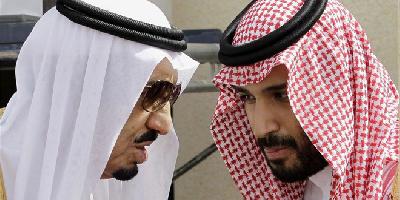
The current inheritor of Caliph Yazid bin Mu’āwīyya’s political mantle is Mohammed bin Salman (MbS), the impetuous crown prince of Saudi Arabia, who is also thirty-three years old. He seems intent on repeating the story of Karbala and promoting a fight to finish the Shia in the Middle East just as Yazid did in 680 CE.
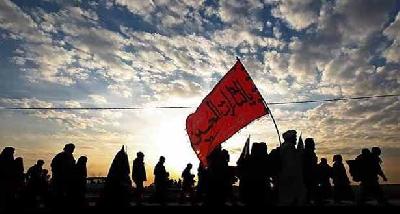
In 680 CE, less than fifty years after the death of Prophet Muhammad, an army of over thirty thousand men was deployed by thirty-three-year-old Umayyad Caliph Yazid to confront a tiny group of seventy-two people led by the prophet’s grandson, Hussein ibn Ali (as), who had challenged the legitimacy of the Umayyad hereditary rule as un-Islamic. In the resulting battle that took place in Karbala on the banks of the Euphrates in modern Iraq, Hussein and his companions were killed almost to the last man. Following the battle, his kinswomen, belonging to the house of the prophet, and their children were taken in captivity to Damascus, the capital of the Umayyad caliphate.
This was the seminal event in the history of early Islam that led to the consolidation of the political identity of the Shia (Partisans) of Ali, the prophet’s son-in-law, Hussein’s father, the fourth of the righteous caliphs and the first Imam of the Shia. Theological differences between the Shia and those who upheld the legitimacy of the Umayyad dynasty, despite its usurpation of the Caliphate (who came to be known as Sunnis three hundred years later), emerged during the next couple of centuries. Religious schism clearly followed political schism and not the other way around as is commonly assumed.
The current inheritor of Caliph Yazid bin Mu’āwīyya’s political mantle is Mohammed bin Salman (MbS), the impetuous crown prince of Saudi Arabia, who is also thirty-three years old. He seems to be currently promoting a fight to the finish with the Shia in the Middle East just as Yazid did in 680 CE. Keeping in mind the balance of forces in the region, especially between Saudi Arabia and the leading Shia power Iran, he has chosen the Lebanese Hezbollah as his first target. He seems intent on repeating the story of Karbala by destroying Hezbollah, a military pigmy compared to the armed might of Saudi Arabia, just as Yazid’s forces had destroyed Hussein’s miniscule band of followers in the seventh century.
The forced detention by Riyadh of former Lebanese prime minister, Saad Hariri, is but the first shot in this battle. Hariri’s main crime in Saudi eyes was that, while being bankrolled by Riyadh, he accommodated Hezbollah as part of a national unity government in Lebanon. Hariri did so in order to minimize sectarian antagonism that had been once again growing in the country thanks to the sectarian color in which the Saudis and their Western supporters had painted the civil war in neighboring Syria and to Hezbollah’s participation in that conflict on the side of the Assad regime. Moreover, excluding Hezbollah from government would have made Lebanon ungovernable given Hezbollah’s military strength, which is miniscule when compared to Saudi Arabia’s military strength yet has surpassed that of the Lebanese army. It also would have put into jeopardy the political support that Lebanon commands among the Lebanese Shia, who form just under half of the Lebanese population.
Hezbollah is seen by the Saudi regime as a surrogate for its real enemy, Iran, with which it is locked in a no-holds-barred contest for dominance in the Persian Gulf. MbS’s actual goal is to cut Iran down to size and make it accept Saudi hegemony in the Persian Gulf. Just as Hussein’s refusal to accept Yazid’s authority was seen as a challenge to the latter’s religious and political legitimacy in the seventh century, today the Wahhabi House of Saud feels its religious legitimacy is at stake as long as Iran, the leading Shia country, which also projects itself as the model Islamic state, refuses to accept it as the predominant power in the Persian Gulf and the exclusive fount of religious authority within Islam. As was the case in the seventh century, issues of political power and religious legitimacy have become inextricably intertwined in the Saudi-Iranian rivalry today.
However, there is one major difference. Iran is a major power in its own right with potential nuclear capability weapons and not a ragtag band of a few dozen followers of Imam Hussein. Moreover, despite the fact that Saudi Arabia’s oil reserves account for one-fifth of the world’s reserves and it can outspend Iran many times over in the short run, its recent attempts at buying influence in the region have ended in failure. These failures include its support for the largely Sunni Islamist opponents of the Syrian regime who have been almost wiped out by Assad’s forces supported by Iran and Russia. Also, Saudi Arabia’s attempt to isolate and quarantine tiny Qatar has not only failed, it has forced Qatar into Iranian arms.
Above all, the country’s indiscriminate bombing of Yemen, which is aimed at ousting from power the Houthis, who are Zaidi Shia and not Twelever Shia like Iran, has failed miserably. This last venture, supported by the United States, has inflicted untold miseries on the Yemeni people without making a dent on the Houthis’ control of much of the country. Finally, despite the expenditure of vast resources Saudi Arabia has been unable to recruit loyal long-term allies in the region that are linked to it ideologically or by means of its soft power.